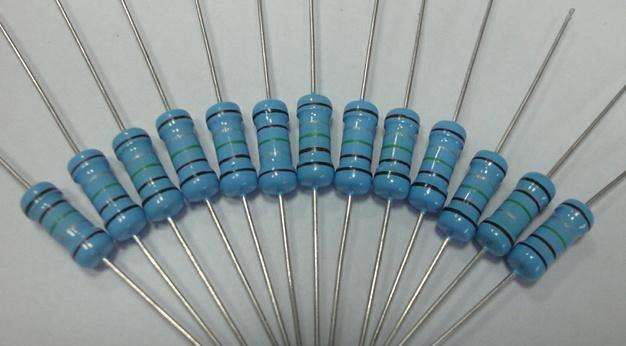
Resistor: Resistors are one of the most common electronic components. They are used to limit the current flowing in a circuit. Depending on their resistance value, they are used in different circuit designs to control voltage and current.Capacitor: Capacitors store electrical energy and play important roles in filtering and stabilizing current in circuits. They are widely used in power supply systems, signal processing, and energy storage.Diode: Diodes are components that allow current to flow in only one direction. They are primarily used in rectification processes to convert alternating current (AC) to direct current (DC), as well as for voltage regulation and protection in circuits.Transistor: Transistors function as switches or amplifiers. They are the building blocks of modern electronics, used in everything from audio amplifiers to microprocessors, for amplifying signals or switching electronic signals.Integrated Circuit (IC): An IC combines many electronic components (resistors, capacitors, diodes, transistors) into one small package, providing high functionality and efficiency. ICs are the backbone of modern digital systems and devices.Transformer: Transformers are used to increase or decrease voltage levels in circuits. They work on the principle of electromagnetic induction and are essential in power distribution and AC signal transmission.Inductor: Inductors store energy in a magnetic field when current flows through them. They are commonly used in power supplies and filters to smooth current and block high-frequency noise.Power Management IC: Power management ICs regulate and distribute power in electronic systems. These ICs handle voltage conversion, battery charging, and power control, ensuring the proper functioning of devices that require stable power supply.Switch: A switch is a simple yet critical component that opens or closes an electrical circuit. It is used to control the flow of electricity and is found in nearly every electronic device.Sensor: Sensors detect physical changes in the environment, such as temperature, humidity, or light, and convert these changes into electrical signals. Sensors are key components in applications like automation, robotics, and IoT devices.

In the second quarter of 2021, the United States, South Korea, the European Union, and Japan announced new semiconductor strategies, while China’s semiconductor plan was still in preparation. According to initial estimates, over the next five to ten years, global investments in the semiconductor industry will total at least $1.5 trillion. Notably, based on past semiconductor trends, major industry booms are often followed by significant downturns, so semiconductor companies must remain cautious about expanding production. In recent years, the global semiconductor supply chain has faced immense challenges—COVID-19 and international trade disputes severely disrupted the global supply chain, revealing flaws in national supply chains. In response, governments have shifted focus to “internal circulation,” with a semiconductor competition centered on "improving internal capabilities" now underway.Semiconductor Strategic Plans Worldwide:The global semiconductor industry has entered a new phase, where the focus has shifted from economic global cooperation to the construction of a complete semiconductor supply chain.United States "Semiconductor Incentive Program" – $52 billion investmentOn May 11, 2021, 64 companies formed the U.S. Semiconductor Alliance (SIAC) and urged Congress to approve the $52 billion "Semiconductor Incentive Program." The program aims to significantly enhance U.S. chip production and research capabilities within five years, including $39 billion for production and R&D, $10.5 billion for project implementation, and $1.5 billion for emergency financing.South Korea "K-Semiconductor Strategy" – $510 trillion won investment over 10 yearsOn May 13, 2021, South Korea announced the "K-Semiconductor Strategy" with a massive $510 trillion won investment by 2030. The initiative, which aims to lead the global semiconductor supply chain, will involve public-private collaborations, with tax incentives, financial support, and talent development at its core.EU "2030 Digital Compass" Plan – Production of 20% of global high-end semiconductorsIn response to the pandemic, the EU launched the "2030 Digital Compass" plan to reduce dependence on U.S. and Chinese tech. The plan includes a €50 billion ($38.6 billion) investment to create a robust semiconductor ecosystem in Europe and aims to produce 20% of the world's cutting-edge semiconductors by 2030.Japan’s Semiconductor Digital Industry StrategyJapan’s Ministry of Economy, Trade, and Industry (METI) outlined its "Semiconductor Digital Industry Strategy" on June 4, 2021, emphasizing global cooperation in semiconductor manufacturing, with a focus on digital investments, advanced logic design, and strengthening domestic industry resilience.China’s "Chip Confrontation" Plan – $1 trillion investment?China is reportedly preparing a massive $1 trillion semiconductor investment plan, led by Vice Premier Liu He, designed to help local chip manufacturers overcome U.S. sanctions. This plan could connect with China's "2030 Plan" and the "14th Five-Year Plan," which highlight third-generation semiconductor development as a priority. China has already made significant strides with large-scale investment in its integrated circuit industry, such as the establishment of the National Integrated Circuit Industry Investment Fund, which has provided billions for manufacturing, design, and equipment.Caution on Semiconductor Investments and ExpansionWhile countries push forward with strategic plans, semiconductor companies must exercise caution. SEMI forecasts 29 new semiconductor fabs to be built by 2022, with over $140 billion in equipment spending. However, the semiconductor industry is cyclical, and past data shows that industry booms often precede downturns. This pattern demands careful investment and capacity expansion strategies, particularly when new projects come online, as investments must be weighed for long-term returns.Conclusion: Global Collaboration for Win-Win OutcomesDespite strong national efforts, the semiconductor industry is deeply intertwined, with the production process spanning multiple countries and regions. As the U.S. leads in design, Taiwan and South Korea set manufacturing benchmarks, and China boasts the world’s largest semiconductor market, but faces significant manufacturing gaps. For global success in the semiconductor industry, it will require joint efforts across all regions, combining capital, technology, and expertise.
Let’s start with TSMC. Due to the U.S. implementing a ban, TSMC was forced to 'cut off' supplies to Huawei. This caused great headaches for Huawei, as only TSMC could produce 5nm chips. How impressive is TSMC? Some of the world’s most advanced chips, like Qualcomm Snapdragon, Apple A-series, and Huawei Kirin, are all produced by TSMC. The company controls 53% of the global market share. Although TSMC’s size is less than a third of Huawei’s, its net profit in 2019 was 20 billion more than Huawei’s. Why is TSMC so outstanding? Because it has perfected the manufacturing of integrated circuits. It can pack 30 billion transistors onto a chip the size of a fingernail.2Let’s also talk about ASML from the Netherlands, which is translated as "阿斯麦" in Chinese. The most important lithography machines used by TSMC to produce chips come from ASML. How impressive is ASML? It’s the only company capable of manufacturing lithography machines for producing 7nm and 5nm chips. ASML has a strict purchasing policy. Its most advanced lithography machine costs around 150 million euros per unit, and only companies that have invested in ASML, like Intel, Samsung, and TSMC, can receive priority in the supply of these machines. Chinese companies desperately want to buy them, but ASML just doesn’t sell to them; it only sells 'older models' to China. Why is ASML so impressive? Because it has pushed precision optics and machinery to the extreme. Just to give one example, the air in ASML’s production workshop is 10,000 times cleaner than the air outside.3Why am I talking about TSMC and ASML? Because I recently saw a statement: 'In every industry, 1% of people take 99% of the cake, and the remaining 99% rely on the 1% of the cake to get by.' We used to talk about the 80/20 rule, but in the last 20 years, especially in the last decade, in high-tech and emerging fields, the 80/20 rule has evolved into the 1/99 rule, meaning 1% vs. 99%. Take TSMC and ASML I mentioned earlier, for example. Or take the booming live-streaming e-commerce; now, even though over a million people are engaged in live-streaming, influencers like Viya and Li Jiaqi, who are in the 1%, take 99% of the industry's cake. So, what I want to say is this: No matter which industry you're in, strive to become that 1%. How do you become that 1%? Pursue excellence.4Pursuing excellence is not just a privilege for the experts; ordinary people can do it too. Let me tell you a true story, one from Liu Run, the Chairman of Runmi Consulting. One day, Liu Run was heading to the airport from Xujiahui, and while searching for a taxi in front of the Meiluo Building, a taxi spotted him and professionally stopped right in front of him. The driver asked, 'Where are you headed?' Liu Run replied, 'To the airport.' The driver continued, 'I only work in two places in Xujiahui: Meiluo Building and Junyao Building. Before I picked you up, I circled Meiluo Building twice, and finally saw you coming out of the office building.' Liu Run said, 'You have a method!' The driver replied, 'Yes, even driving a taxi requires scientific methods.' Liu Run asked, 'What kind of scientific method?' The driver began to explain in great detail: 'You need to understand statistics. I've calculated precisely, I drive for 17 hours a day, pay 380 yuan to the company, spend about 210 yuan on fuel daily. If you break down the costs per hour, it comes to 34.4 yuan. The cost isn't based on distance, but on time. I’ve done data analysis, and the average empty driving time between passengers is 7 minutes. If you keep picking up passengers with only the base fare, you won’t make much money that day. So, you need to choose where to park, when, and who to pick up, and actively decide where you’re going.'5

Complaining is a major poison in the workplace: Complaints not only harm the individual but also spread negative emotions, which affect others. This is referred to as "emotional pollution" that, like car exhaust, can contaminate the atmosphere around the complainer. Keeping emotions under control is vital for maintaining a positive and productive environment.The greatest victim of complaining is the complainer themselves: Complaints often result in subpar work performance and damaged relationships with colleagues. Those who consistently complain may be seen as arrogant or incompetent, leading to the loss of valuable connections and opportunities.Gratitude for the good things in life: Life is not about complaining but about appreciating what one has. Challenges and workload can seem daunting, but when tasks are assigned, it’s because others believe in your capability. Leaders trust those they believe in, and this trust leads to more opportunities. Embracing this trust fosters a positive perspective and helps overcome struggles.Stop complaining and focus on doing good work: Success often comes disguised as challenges and setbacks. However, persistence and hard work, despite difficulties, lead to excellence and eventually to success. The process may seem slow and arduous, but continued effort will bring greater results and fulfillment.The message is clear: focus on gratitude, perseverance, and self-reflection to achieve success without resorting to complaining.
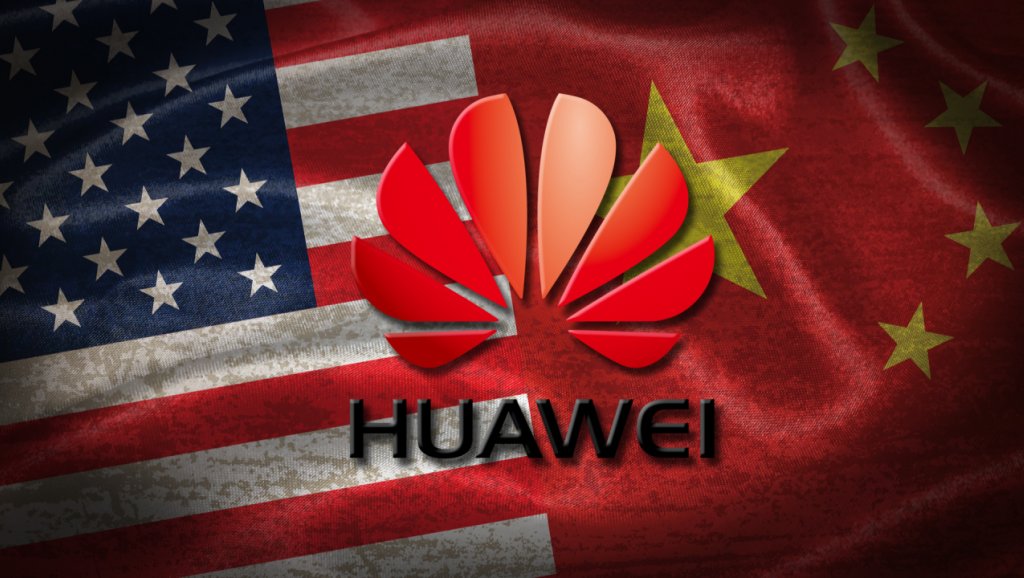
Developing Independent Chips: Huawei focused on enhancing its chip development, starting as early as 2003. After facing setbacks in the mobile chip market, it began producing its own chips, such as the Kirin series. Despite challenges, the company continued to push forward, even expanding its efforts to develop advanced semiconductors and securing reserves to handle the chip shortage.Selling the Honor Brand: To mitigate the impact of the sanctions, Huawei sold its Honor brand in November 2020. This move allowed Honor to regain access to suppliers like Qualcomm, which Huawei itself couldn't utilize due to the US sanctions. This strategic sale helped Huawei focus more on its core business while enabling Honor to independently thrive.Expanding the Ecosystem with HarmonyOS: Huawei has also been advancing its "1+8+N" strategy, which involves the integration of smartphones, tablets, PCs, wearables, and more into a connected ecosystem. Along with this, Huawei opened its HarmonyOS to the public in June 2021, aiming to establish a broad ecosystem in the AIoT sector.Adjusting Consumer Business Strategy: As part of short-term recovery, Huawei has adjusted its distribution strategies by focusing more on high-end devices and integrating hardware products like smart speakers, earbuds, and AIoT devices alongside smartphones.These approaches show Huawei's multi-faceted response to the constraints of the chip shortage and market challenges, with an emphasis on innovation, resourcefulness, and strategic shifts